








Concrete can be found practically everywhere, including in structures like buildings, bridges, walls, swimming pools, roadways, airport runways, floors, patios, and even houses made of cement. These structures are all dependent on a manufactured substance with a basic formula. How did they make all that concrete building?
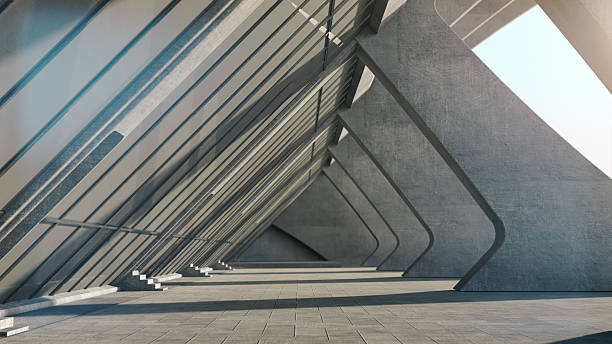
Concrete is made up of cement, water, and coarse particles. They combine to form a concrete building material that gradually becomes harder over time. The quantity of water and cement used determines the qualities of concrete, such as strength, durability, resistance to heat or radiation, and workability
Fresh concrete can be shaped into a variety of shapes, including circles, rectangles, squares, and more. Additionally, it can be utilized for typical constructions like stairs, columns, doors, beams, and lentils. There are several grades of concrete produced, such as normal, standard, and high-strength grades. These grades describe the concrete’s strength and its intended use in a building.
What Kind Concrete Types Usable For Concrete Building
Normal Concrete
Concrete, sand, and aggregate are all included in this concrete in a 1:2:4 ratio. This results in concrete of average strength. Based on the qualities of the cement and the local weather at the concrete site, it can take anywhere from 30 to 90 minutes to set.
Plain Concrete
One of the most popular types of concrete, plain concrete is excellent for pavements and other areas that don’t require a lot of tensile strength. This form of concrete combines cement, sand, and aggregates according to the 1:2:4 mix design.
Lightweight Concrete
Lightweight concrete is defined as any type of concrete with a density of less than 1920kg/m3. Concrete that is lightweight is made with lightweight aggregates.. Aggregates are components that increase the density of a certain concrete type. Natural elements like scoria or volcanic, man-made materials like clays and expanded shales, or processed minerals like vermiculite and perlite make up these lightweight aggregates. Its extremely low thermal conductivity is its most significant characteristic.
High-Density Concrete
The use of high-density concrete is very specialized. It is frequently applied to the building of nuclear power facilities. The high-density concrete’s ability to resist radiation is helped by the use of heavyweight aggregates.
Reinforced Concrete
This concrete kind is commonly utilized in industrial and modern buildings. Before the concrete sets, wires, steel rods, or cables are inserted to increase their strength. These things are also known as rebar. Fibers have lately been used to reinforce this concrete.
Prestressed Concrete
Prestressed concrete units are used in many big concrete projects. A unique method is used to make prestressed concrete. It has bars or tendons, just like reinforced concrete does. But before the concrete is applied, these bars or tendons are under stress. utilized frequently in piles, floor beams, water towers, bridges, runaways, and railway sleepers.
Precast Concrete
This concrete is manufactured and cast in a factory to exacting standards. The precast concrete units are made substantial to the location and put together. Concrete blocks, precast walls, stair components, and poles are all examples of precast construction.
Air Entrained Concrete
Every cubic foot of some variety of concrete may accommodate billions of microscopic air cells. The internal pressure on the concrete is reduced by these tiny air gaps. They offer microscopic spaces where water can grow during the freezing process. By including different foaming agents during the mixing process, such as alcohols, resins, or fatty acids, the air is entrapped in the concrete. Given that the concrete is mixed on the job site, this must be done carefully and under technical supervision.
Glass Concrete
Recycled glass is used in glass concrete. When aesthetic value is a key component in the design of concrete, this type of concrete is used. This concrete can have sparkling or colorful glass implanted during the mixing process to give it a particular splash of color or sparkle. These concrete structures are frequently utilized in large-format slabs used in flooring or on beautiful exteriors.
Asphalt Concrete
This concrete is frequently used for sidewalks, parking lots, highways, airport runways, and pretty much anywhere else where pavement is required. Asphalt is a dark material made up of a combination of bitumens, which are hydrocarbons.